About Shotokan Karate
The way of karate — discipline, respect, and self-improvement
Gichin Funakoshi (1868–1957)
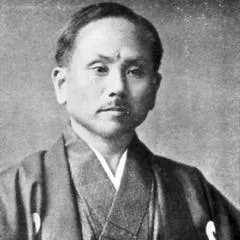
Master Funakoshi
Founder of Shotokan (1868–1957)
Gichin Funakoshi is widely regarded as the father of modern karate. Born in Shuri, Okinawa, he began training in Okinawan martial arts (Te) under masters Itosu Anko and Azato Yasutsune. In 1922, Funakoshi was invited to demonstrate karate at the first Ministry of Education-sponsored athletics exhibition in Tokyo — a pivotal moment that introduced karate to mainland Japan.
In 1936, he established the Shotokan dojo in Tokyo. The name "Shotokan" literally means "House of Shoto" — "Shoto" (Pine Waves) was Funakoshi's pen name for the poetry he wrote. His style became the most widely practiced form of karate in the world.
The 20 Precepts (Niju Kun)
Funakoshi's guiding principles for karate practitioners
Karate begins and ends with courtesy.
There is no first strike in karate.
Karate is an aid to justice.
First know yourself before attempting to know others.
Spiritual development is paramount; technical skills are merely means to the end.
Be ready to release your mind.
Misfortune comes from negligence.
Do not think that karate training is only in the dojo.
It will take your entire life to learn karate; there is no limit.
Put your everyday living into karate and you will find the "secret".
Karate is like boiling water: without heat, it returns to its tepid state.
Do not think of winning; think rather of not losing.
Make adjustments according to your opponent.
The outcome of a battle depends on how one handles emptiness and fullness (weakness and strength).
Think of the hands and feet as swords.
When you step beyond your own gate, you face a million enemies.
Beginners' forms are temporary; advanced forms are temporary too.
Kata is a process; not the end result.
Do not forget the employment of "yielding" (tai sabaki), and "strength".
Always be mindful and think deeply of the way you practice.
The Three Pillars of Training
Kihon (Basics)
Foundational techniques including stances, punches, kicks, blocks, and strikes.
- • Zenkutsu-dachi (front stance)
- • Gyaku-zuki (reverse punch)
- • Mae-geri (front kick)
- • Age-uke (rising block)
Kata (Forms)
Choreographed patterns of movements simulating combat against multiple opponents.
- • Heian Shodan
- • Heian Nidan
- • Bassai Dai
- • Kanku Dai
- • Empi
Kumite (Sparring)
Practical application of techniques against an opponent, from basic drills to free sparring.
- • Gohon kumite (5-step sparring)
- • Sanbon kumite (3-step)
- • Kihon ippon kumite
- • Jiyu ippon kumite
- • Jiyu kumite (free sparring)
Belt Rank System (Kyu & Dan)
Kyu Grades (Beginner to Advanced)
Dan Grades (Black Belt Levels)
From 1st Dan (Shodan) to 10th Dan (Judan). Funakoshi himself held the rank of 5th Dan. Modern practitioners can progress through ten levels of black belt, each representing deeper mastery of technique, teaching ability, and philosophical understanding.